 Anthony Wright
Preparing for an interview can feel like a daunting task, especially when you’re unsure about what to bring along. You want to make the best impression possible, and having the right items with you can be a game-changer.
Imagine walking into the interview room, feeling confident and ready, knowing you have everything you need to showcase your potential. This simple preparation can set you apart from other candidates, making you memorable for all the right reasons. So, what exactly should you take to an interview to ensure success?
Let’s dive in and make sure you’re fully equipped to shine.
Research Materials
Preparing for an interview involves more than dressing smartly. Bringing research materials can make a difference. They show your interest and dedication. This section focuses on key research materials to take.
Company Information
Learn about the company’s history and mission. Know its values and culture. Research recent news or achievements. Understand its market position. This knowledge helps you connect with the interviewer. Show you are informed and enthusiastic.
Job Description
Read the job description carefully. Highlight key responsibilities and required skills. Understand the role and its demands. This helps tailor your answers. Show how your skills match the job. Be ready to discuss the specific points listed.
Personal Identification
Preparing for an interview involves more than rehearsing answers. You need to gather essential documents. Personal identification tops the list. It verifies your identity and builds trust with potential employers. Don’t overlook this crucial step.
Id Documents
Bring a government-issued ID. A driver’s license or passport works best. These documents confirm your identity to interviewers. Having them ready shows you are well-prepared. This detail may seem small, but it makes a big impression.
Interview Invitation
Carry a copy of the interview invitation. It contains vital details about the meeting. You can quickly reference the location and time. It also helps if there are any last-minute changes. This shows you are organized and attentive.
Copies Of Resume
Bringing copies of your resume is essential for any interview. It shows preparedness and professionalism. Even if you sent your resume earlier, a printed copy can be handy. It ensures everyone has a copy to reference during the discussion.
Printed resumes make a strong impression. They serve as a reminder of your qualifications. Keep them neat and organized in a folder. This small step can make a big difference.
How Many Copies Should You Bring?
Always bring at least three copies of your resume. This covers you in case there are multiple interviewers. If unsure, bring a few extra copies. It’s better to have more than less.
Format And Presentation Matter
Ensure your resume is printed on quality paper. Plain white or cream paper works well. Use a simple, clean format for easy reading. Avoid bright colors or fancy fonts. Keep it professional and straightforward.
Be Ready For Questions
Interviewers may ask questions based on your resume. Review your resume thoroughly before the interview. Be prepared to discuss any part of it in detail. Know your achievements and experiences well.
Why A Folder Is Important
A folder keeps your resumes neat and presentable. Choose a simple, professional-looking folder. It prevents your resumes from getting wrinkled or damaged. It also shows your attention to detail.
:max_bytes(150000):strip_icc()/what-to-bring-to-a-job-interview-2061309-FINAL-edit-e6dd825d5fcc42a6a2032ae3ae846513.jpg)
Credit: www.thebalancemoney.com
Portfolio Or Work Samples
Walking into an interview, you want to stand out. A well-prepared portfolio or work samples can do just that. These materials showcase your skills and past successes. They provide tangible evidence of your abilities. Ensure your portfolio aligns with the job you’re applying for. Tailoring it to the position shows your understanding of the role. It also reflects your preparation and dedication.
Relevant Projects
Choose projects that match the job description. This connection makes it easier for the interviewer to see your value. Highlighting these projects shows your hands-on experience. It also demonstrates your ability to deliver results. Keep descriptions clear and concise. Include only the most impactful details. This approach keeps the focus on what matters most.
Professional Achievements
List any professional achievements with pride. Awards, certificates, and recognitions all matter. They tell a story of your dedication and success. These achievements set you apart from other candidates. They provide proof of your capabilities and ambition. Ensure each item in your list is relevant and recent. This keeps your portfolio fresh and engaging.
List Of References
Bring copies of your resume and a list of references to your interview. These show your experience and credibility. A well-prepared list can impress potential employers and highlight your professional network.
Preparing for an interview can be nerve-wracking, but having a solid list of references can give you an added edge. Your references are people who can vouch for your skills, experience, and character. They can be former bosses, colleagues, or even professors who have seen your work ethic and abilities firsthand. Think of them as your professional cheerleaders. But how do you choose the right ones? Let’s dive into the details.
What Is A List Of References?
A list of references is a document you bring to an interview that includes contact information for people who can speak positively about your professional abilities. This list is separate from your resume and should only be given if the employer requests it. Having it ready shows that you are prepared and serious about the opportunity.
How To Choose The Right References
Select individuals who have worked closely with you and can provide specific examples of your strengths. Choose people who can speak confidently about your work ethic and skills. It’s not about the title of the person, but the quality of the relationship and the insights they can share.
How Many References Should You Include?
Typically, three to five references are sufficient. You want enough voices to provide a full picture of your capabilities without overwhelming the employer. Ensure that each reference offers a unique perspective on your skills and experiences.
Contacting Your References
Reach out to your potential references before listing them. Ask if they are comfortable being a reference and inform them about the type of job you’re applying for. This way, they’re prepared to highlight relevant skills and experiences.
Formatting Your List Of References
Your list should be neat and professional. Include the name, job title, company, phone number, and email address for each reference. Here’s a simple format you can follow: `html
| Name | Job Title | Company | Phone | |
|---|---|---|---|---|
| John Doe | Senior Developer | Tech Corp | (123) 456-7890 | johndoe@example.com |
Updating Your References
Keep your references updated about your job search progress. Inform them when you get an interview and thank them for their support. Regular communication keeps your references engaged and willing to help.
Anticipating Reference Checks
Consider how reference checks might be conducted. Some employers might contact references via phone, while others may send emails. Prepare your references for either scenario by offering them some context about the role and company. Your references can be the deciding factor in securing a job. Choose wisely and keep them informed. Have you ever thought about how your references perceive you? Engaging with them can provide valuable feedback for your professional growth.
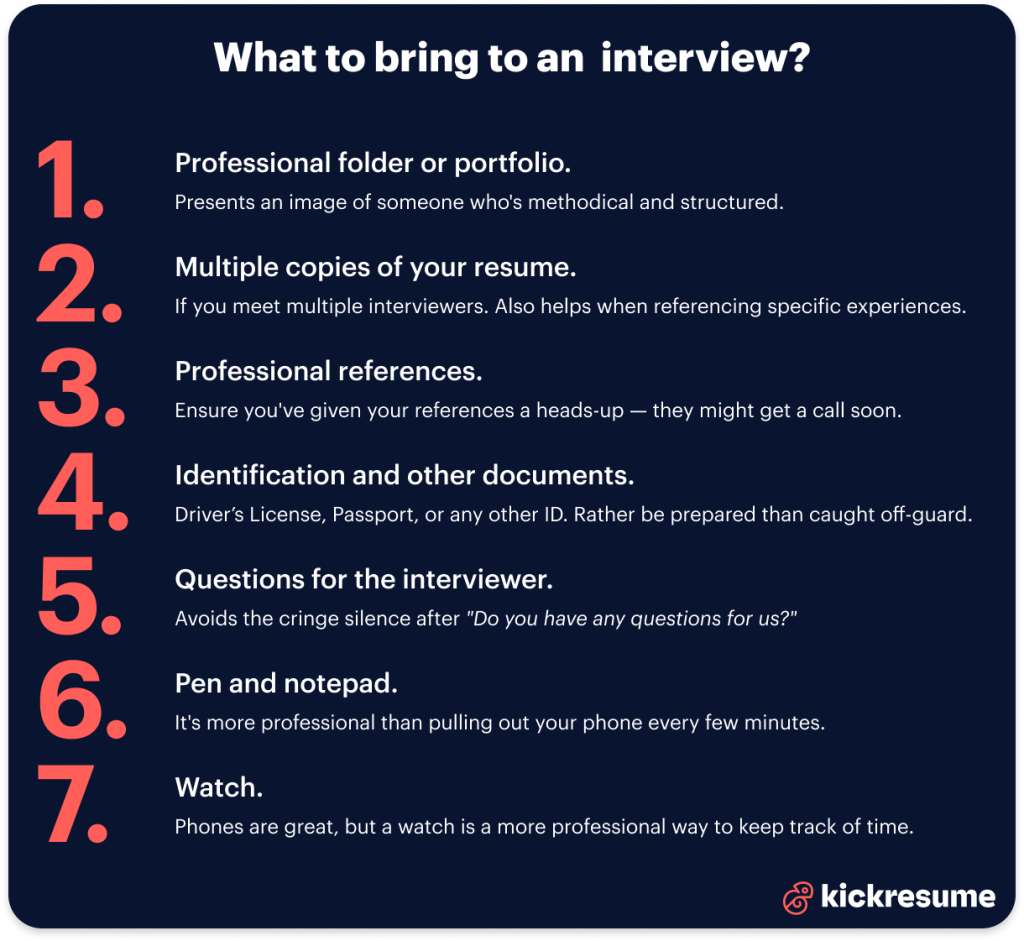
Credit: www.kickresume.com
Questions For The Interviewer
Bring a copy of your resume and a notebook to jot down important information. Dressing neatly and having a pen handy shows preparedness. Ask insightful questions about company culture and growth opportunities to engage the interviewer.
Preparing for an interview involves more than polishing your resume and rehearsing your answers. It’s equally important to think about the questions you want to ask your interviewer. Asking insightful questions not only shows your genuine interest but also gives you a clearer picture of the role and company. It’s your chance to evaluate if the position aligns with your goals.
Why Should You Ask Questions?
Asking questions during an interview isn’t just a formality. It demonstrates that you’re proactive and engaged. It signals that you’re not just looking for any job, but the right job. Imagine sitting across from your potential boss and asking about their leadership style. This could reveal much about how your future work environment might be.
Examples Of Good Questions
Think about asking questions that provide you with valuable insights. You might ask about the team’s recent successes or challenges. This can help you understand the dynamics and focus of the team. Consider asking about the company’s growth plans. This shows your interest in the long-term vision and your potential future with the company. It also gives you an idea of stability and opportunities for advancement.
How Many Questions Should You Prepare?
You don’t want to overwhelm your interviewer with a barrage of questions. Choose three to five thoughtful questions. This keeps the conversation balanced without losing momentum. It’s a delicate dance—having enough questions to show your enthusiasm, but not so many that you appear unfocused.
Timing Is Everything
Knowing when to ask your questions is crucial. Typically, interviewers will ask if you have any questions towards the end of the meeting. However, if the opportunity presents itself naturally during the conversation, don’t hesitate to ask them then. It shows you’re attentive and engaged.
Avoid Common Pitfalls
Steer clear of questions that can be easily answered by a quick search online. Asking questions about salary or benefits too early can also be off-putting. Instead, focus on understanding the company culture, expectations, and your potential role within the team. What questions do you think might surprise your interviewer and make them remember you?
Notepad And Pen
Preparing for an interview can be nerve-wracking. Bringing a notepad and pen is essential. It helps you stay organized and makes a good impression. Writing notes shows interest and attention to detail.
Why Bring A Notepad And Pen?
Taking notes during an interview helps you remember key points. It shows the interviewer you are serious. It also allows you to jot down questions you may have. Keeping track of important details is crucial for follow-up.
Choosing The Right Notepad
Pick a professional-looking notepad. Avoid colorful or flashy designs. A simple, clean notepad works best. It should be easy to carry and not too bulky. Choose one that fits comfortably in your bag.
Selecting The Perfect Pen
Your pen should write smoothly. Avoid pens that smudge or skip. Choose a reliable brand for peace of mind. Ensure it’s easy to grip and comfortable to write with. Having a backup pen is always wise.
Using Your Notepad Effectively
Start by noting the interviewer’s name. Write down key points and questions. Keep your notes organized. Use bullet points for clarity. Avoid writing long sentences. Focus on capturing important information.
Demonstrating Preparedness And Interest
Using a notepad shows you are prepared. It reflects your interest in the position. Employers appreciate candidates who are organized. It makes you stand out as a serious applicant. Being prepared boosts your confidence.
Professional Attire
A neat suit, polished shoes, and a tidy hairstyle create a professional image for an interview. Carry a simple portfolio with copies of your resume and a pen. Neutral colors and minimal accessories are best.
Preparing for an interview involves more than just rehearsing your answers; it’s also about making a strong first impression. Your professional attire plays a key role in how you’re perceived. Dressing appropriately not only shows respect for the company but also boosts your confidence. What you wear can influence the outcome of your interview. But what exactly should you wear to nail that first impression? Let’s break it down.
Dress Code
Understanding the company’s dress code is crucial. Research the company culture to determine if it’s formal, business casual, or creative. Formal environments typically require a suit and tie for men and a business suit or dress for women. Business casual might allow slacks and a button-down shirt or a modest dress. In a creative setting, you might have more leeway but avoid overly casual attire like jeans. Have you ever worn something and felt underdressed? This is a situation you want to avoid at an interview. Always err on the side of caution and dress a notch above the company’s norm.
Grooming Essentials
Your grooming should complement your attire and enhance your overall presentation. Ensure your hair is neat and tidy. For men, a clean shave or well-groomed facial hair is essential. Ladies, keep your makeup subtle and professional. Nail care matters too—clean, trimmed nails are a must. Your grooming can speak volumes about your attention to detail. Have you ever noticed how a simple haircut can transform your look? Small tweaks can make a big difference. In your quest to impress, remember that your attire and grooming reflect your personality and professionalism. What are you communicating through your appearance?
Preparation Materials
Bring copies of your resume to the interview. Prepare a list of references. Consider a notebook for jotting down notes.
Preparing for an interview goes beyond rehearsing answers and dressing appropriately. The materials you bring can significantly impact how organized and professional you appear. Having the right preparation materials can set the stage for a successful interview and give you that extra confidence boost. Let’s dive into what you should have in your arsenal.
Interview Practice Notes
Before stepping into the interview room, having your practice notes handy can be a game-changer. Remember that one time you blanked on a crucial question? With notes, you can quickly review key points, ensuring your responses are sharp and relevant. Make a list of common interview questions and jot down bullet-point answers. This keeps your thoughts organized and prevents you from forgetting important details. Consider highlighting areas you’re passionate about or have unique experiences in. Have a friend or mentor quiz you using your notes. Their feedback can help you improve and anticipate questions you might not have thought of.
Company Insights
Knowing the ins and outs of the company can make you stand out. It’s not just about memorizing facts; it’s about showing genuine interest. Ask yourself, what is this company’s mission and how do you align with it? Research recent news articles about the company. This shows you’re aware of their current challenges and successes. A table summarizing key company achievements or initiatives can be a quick reference during your interview. Also, check out their social media profiles. It’s a goldmine for understanding their culture and values. You might even discover a project or campaign that you’re excited to discuss. By bringing these preparation materials, you’re not just prepared; you’re ready to make an impression. Are you ready to demonstrate your enthusiasm and dedication?
Emergency Supplies
Prepare for your interview by packing essential items. Bring copies of your resume, a notepad, and a pen. Consider a bottle of water and a small snack for energy.
Preparing for an interview goes beyond knowing your resume and rehearsing your answers. It’s also about being ready for unexpected situations. You might find yourself needing emergency supplies. These essentials can save your day and keep your stress at bay, ensuring you present your best self. Let’s delve into some critical emergency supplies you might need.
Contact Information
Imagine you’re on your way and your phone dies. How do you reach out to your interviewer? Keep a printed copy of the contact information for your interviewer or company. This includes their phone number and email address. It’s a simple precaution, but it can save you from unnecessary anxiety.
Transport Details
Have you ever been stuck waiting for a bus that’s running late? Or maybe you realize your car won’t start? Always carry backup transport details. This might include a list of alternative routes or taxi service numbers. If you’re using public transport, know your schedule and have a plan for unexpected delays. Tip: If possible, consider downloading offline maps to your phone. They can guide you even without an internet connection. These supplies might seem trivial, but they can play a crucial role during unexpected hiccups. What’s your go-to emergency item for interviews? Share your thoughts below!
Frequently Asked Questions
What Documents Should I Bring To An Interview?
Bring copies of your resume, cover letter, and references. Having these documents handy shows you’re prepared. Consider bringing your portfolio if applicable. Organize them neatly in a folder to present professionally. These items will help you discuss your qualifications effectively.
Should I Carry A Notebook And Pen To Interviews?
Yes, carrying a notebook and pen is recommended. They allow you to jot down important information. Taking notes shows engagement and interest in the role. You can also write down questions to ask. It helps you remember key details shared during the interview.
Is A Professional Bag Necessary For Interviews?
A professional bag is advisable for carrying documents and essentials. It enhances your overall appearance and professionalism. Choose a bag that complements your outfit. Ensure it’s clean and organized. A tidy bag reflects positively on your organizational skills.
Do I Need To Bring Identification To Interviews?
Yes, bring a form of identification like a driver’s license or passport. Some employers may require an ID for security purposes. It’s better to be prepared than to face delays. Confirm with the interviewer if an ID is needed beforehand. It ensures a smooth entry process.
Conclusion
Preparing for an interview can feel overwhelming. Packing the right items eases stress. Bring multiple copies of your resume. A notebook helps you jot down important notes. Take a pen for filling out forms. Dress appropriately to make a good impression.
Don’t forget your portfolio, if needed. Carry a list of questions for the interviewer. Research the company and job role. Arrive with a positive mindset. Confidence is key. Preparation leads to success. Good luck on your interview journey!

 Anthony Wright